
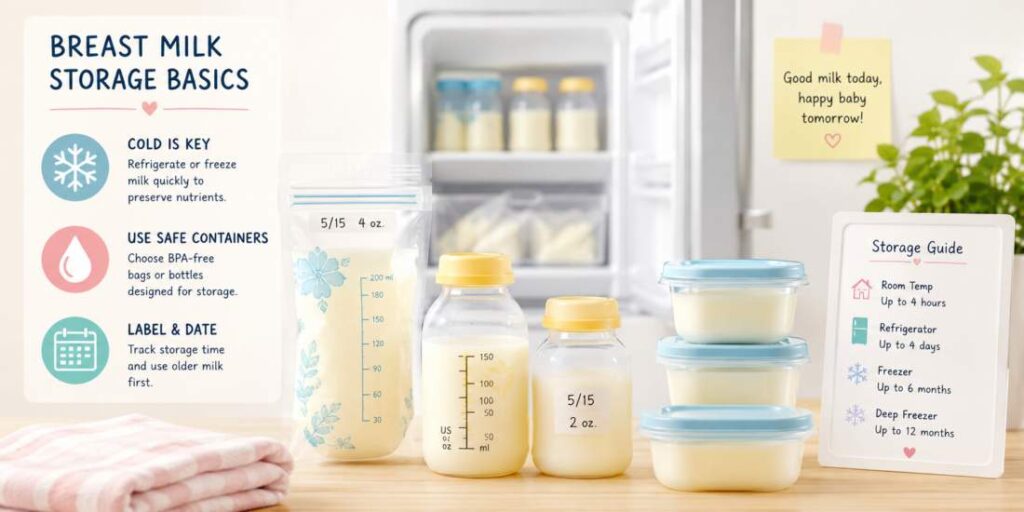
Understanding how storage affects breast milk is not about turning the kitchen into a laboratory. It is about making informed decisions that help preserve milk quality while giving parents confidence in their feeding routines. Between freezer bags, storage bottles, temperature guidelines, and advice passed around online, it is easy to encounter conflicting information. Some recommendations are grounded in research, while others seem to have survived entirely through repetition.
The science behind breast milk storage is surprisingly fascinating, particularly when examining how temperature, containers, and handling practices influence what happens after milk leaves the body.
Why Temperature Matters So Much
Temperature is one of the most important factors affecting stored breast milk. Warm temperatures encourage bacterial growth and accelerate the breakdown of certain components. Cooler temperatures slow these processes dramatically.Freshly expressed breast milk can typically remain at room temperature for a limited period while maintaining quality and safety. Refrigeration extends that window considerably by slowing bacterial activity and preserving nutritional value. Freezing can extend storage even further, making it possible to build a supply for future use.
What surprises many people is that freezing does not completely stop change. Certain enzymes remain active even at very low temperatures, although their activity slows significantly. Some antibodies and nutrients may decrease slightly over time during frozen storage, but breast milk generally remains an excellent source of nutrition.
This is why storage duration recommendations exist. They are not arbitrary numbers pulled from a hat during a committee meeting. They are based on research examining how milk quality changes under different conditions.
Containers Are More Important Than They Look
A storage container does far more than prevent spills. The material used can influence how well milk is preserved.Containers specifically designed for breast milk storage are manufactured to withstand freezing and thawing while minimizing contamination risks. High-quality storage bags and food-grade containers help maintain milk quality and reduce exposure to unwanted substances.
Parents often focus heavily on the milk itself while giving little thought to what holds it. Yet choosing the right container can make organization easier and reduce waste. Few experiences are as frustrating as discovering a leaking storage bag after carefully labeling, freezing, and mentally congratulating oneself on being remarkably organized.
When selecting storage containers, several factors deserve consideration:
- Leak resistance
- Freezer durability
- Ease of labeling
- Available storage space
- Convenience during thawing and feeding
Handling Practices Can Influence Quality
Storage begins before milk ever reaches the refrigerator or freezer. Clean hands, sanitized equipment when appropriate, and careful handling all contribute to maintaining milk quality.Expressed milk should generally be cooled promptly if it will not be used immediately. Repeated warming and cooling cycles are best avoided because they create more opportunities for bacterial growth and nutrient degradation.
Serious attention should also be paid to refrigerator placement. Milk stored near frequently opened doors may experience more temperature fluctuation than milk placed toward the back of the refrigerator. That difference may seem minor, but consistent temperatures help preserve quality over time.
Labeling is another habit supported by both science and practicality. Dating stored milk helps ensure older milk is used first, reducing unnecessary waste. Human memory performs many impressive tasks, but accurately recalling whether a container entered the freezer six weeks ago or three months ago is often not one of them.
Common Myths That Refuse to Retire
Breast milk storage advice has accumulated its share of persistent myths. Some are harmless misunderstandings, while others can create unnecessary anxiety.One common misconception is that separated milk has spoiled. Breast milk naturally separates during storage, with fat rising toward the top. This is completely normal. Gentle mixing after warming often restores a uniform appearance.
Another myth suggests that frozen milk loses all of its beneficial properties. Research shows that while certain components may decline somewhat during storage, frozen breast milk continues to provide significant nutritional and immunological value.
A third misconception involves smell changes after freezing. Some stored milk develops a different odor because of enzyme activity. This change does not automatically indicate spoilage.
Many concerns surrounding stored milk stem from visual changes that appear dramatic but are entirely expected under normal storage conditions.
Evidence-Based Storage Recommendations
Reliable storage guidelines exist to help parents balance convenience with safety. While recommendations may vary slightly between organizations, the general principles remain consistent. Fresh milk tends to retain its quality longest when stored at stable, appropriate temperatures and used within recommended timeframes.One helpful strategy is storing milk in smaller portions rather than large containers. This approach reduces waste because only the amount needed for a feeding must be thawed or warmed. It also allows greater flexibility when feeding schedules change, which they often do with remarkable creativity.
Freezing milk in flat storage bags can save considerable freezer space. Instead of creating an icy mountain range that threatens to avalanche every time the freezer door opens, flat storage allows milk to be stacked and organized more efficiently.
Parents building a freezer supply often find success with a simple first-in, first-out system. Using older milk before newer milk helps ensure stored milk remains within recommended usage periods and minimizes unnecessary disposal.
Thawing Without Guesswork
Proper thawing is just as important as proper storage. Once frozen milk is ready to be used, gradual thawing helps preserve quality while maintaining safety.The refrigerator is generally considered one of the safest places to thaw frozen breast milk. This method keeps milk at a controlled temperature throughout the process. For situations requiring faster preparation, placing the container under warm running water or in a bowl of warm water can be effective.
Extreme heat should be avoided. Very hot temperatures can damage some of the beneficial components naturally present in breast milk. This is one reason direct boiling and excessive heating are not recommended.
Microwaves are frequently discouraged for breast milk warming. Aside from creating uneven heating patterns, they can produce hot spots that may pose risks during feeding.
After thawing, milk should generally be handled according to established recommendations regarding timing and usage. Refreezing previously thawed milk is usually not advised because repeated temperature changes can affect both quality and safety.
Confidence Comes From Understanding
Parents are often exposed to an overwhelming amount of information surrounding infant feeding. Some advice is valuable, some is outdated, and some appears to have originated from a distant relative’s confident recollection of something heard decades ago.Understanding the science behind breast milk storage helps separate evidence from speculation. Rather than relying on myths, parents can make decisions based on how temperature, storage conditions, and handling practices actually influence milk over time.
Knowledge also reduces stress. When a parent understands why milk separates, why containers matter, or why storage times exist, routine decisions become easier. Questions that once seemed complicated become manageable because they are grounded in clear principles rather than uncertainty.
Breast milk storage is not about achieving perfection. It is about creating conditions that help preserve quality while fitting into everyday life. Refrigerators, freezers, labels, and storage bags may not seem particularly exciting on their own, yet together they support an important process that allows expressed milk to remain available whenever it is needed.
Keeping Cool Under Pressure
Stored breast milk represents time, effort, planning, and care. Treating it thoughtfully helps protect the valuable nutritional and biological properties it contains. Fortunately, the science is far less intimidating than it first appears.Appropriate temperatures, suitable containers, good hygiene practices, and sensible storage habits form the foundation of successful milk storage. While myths and misconceptions continue to circulate, evidence-based guidance provides a much clearer path forward.
A little understanding goes a long way. With sound storage practices in place, parents can feel more confident that the milk waiting in the refrigerator or freezer is being preserved in a way that supports both safety and quality. That confidence may not eliminate every parenting challenge, but it certainly makes one corner of the journey considerably easier to manage.
Article kindly provided by babybuddhaproducts.com